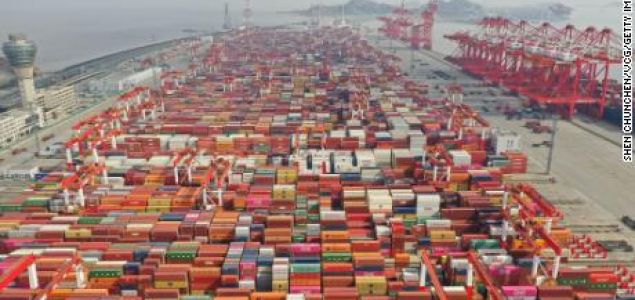

High freight costs, congestion at terminals, earlier peak seasons and due to strict Covid-19 lockdown measures have had a major impact on the global timber supply chain in recent years.
This year, with the gradual recovery of domestic production in many places, will the severe situation in the shipping market improve?
Shanghai port congestion almost back to normal
Congestion at the port has almost returned to normal as Shanghai reopened after a two-month lockdown, according to data from VesselsValue. At present, the waiting time of ships in Shanghai Port is getting shorter and shorter, and the efficiency of the port is constantly improving.
The average wait time for tankers, bulk carriers and container ships in Shanghai increased to 66 hours in late April. Wait times have now shrunk to 28 hours, just one hour more than the peak seen during the same period over the past three years.
Shipping experts say Shanghai will regain lost ground as ports return to normal and may fully recover by the fourth quarter.
As the Shanghai port recovers and the peak season approaches, more exports destined for the U.S. are expected to come aboard, which will challenge the ability of U.S. ports to handle congestion and lead to delays and higher prices.
Port congestion improves
Over the past two years, the number of global port congestion has continued to hit a record high. Recently, according to data from Danish maritime data analysis company Sea-Intelligence, container ship delays and terminal congestion indicators have improved, but due to supply chain delays, 10.5% of the world’s fleet is still unavailable, and global port congestion is still far from the norm. to normal levels.
At North American terminals, the congestion index has been rising steadily since peaking at just over 80 percent in January 2022, but remains at high levels, Sea-Intelligence’s report said.
“The overall congestion index in Europe has dropped significantly over the past month, but congestion levels remain high compared to pre-COVID-19 normal,” said Sea-Intelligence CEO Alan Murphy.
Not only that, but Spain, Italy and Greece also saw marked improvements in port congestion, but in Rotterdam and Hamburg, the busiest container ports, the improvement was modest, the report said.
Freight rates will run high in the short term
Since Shanghai gradually resumed work and production, the Shanghai Export Container Freight Index rose 0.78% to 4,208.01 points, rising for three consecutive weeks. International shipping companies are planning to start a new round of price increases in mid-June, with an increase of at least 10% or more.
On top of that, several major container ports in northern Europe are currently facing severe congestion, resulting in “significantly prolonged” waiting times for berths and slow ship efficiency.
For a vessel carrying such a large amount of cargo, a one-day delay can mean a loss of a million dollars, and those costs are ultimately passed on to importers and exporters. It is expected that freight rates will remain high in the short term.
The post Global port congestion improves, freight rates will remain high appeared first on Timber Industry News.